
Description
Geological Identity and Properties
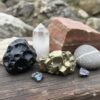
Chalcopyrite is a sulfide mineral with the chemical formula $\text{CuFeS}_2$, meaning it is composed of copper, iron, and sulfur. It crystallizes in the tetragonal system, though well-formed crystals are less common than massive or compact forms.
Key physical characteristics include:
-
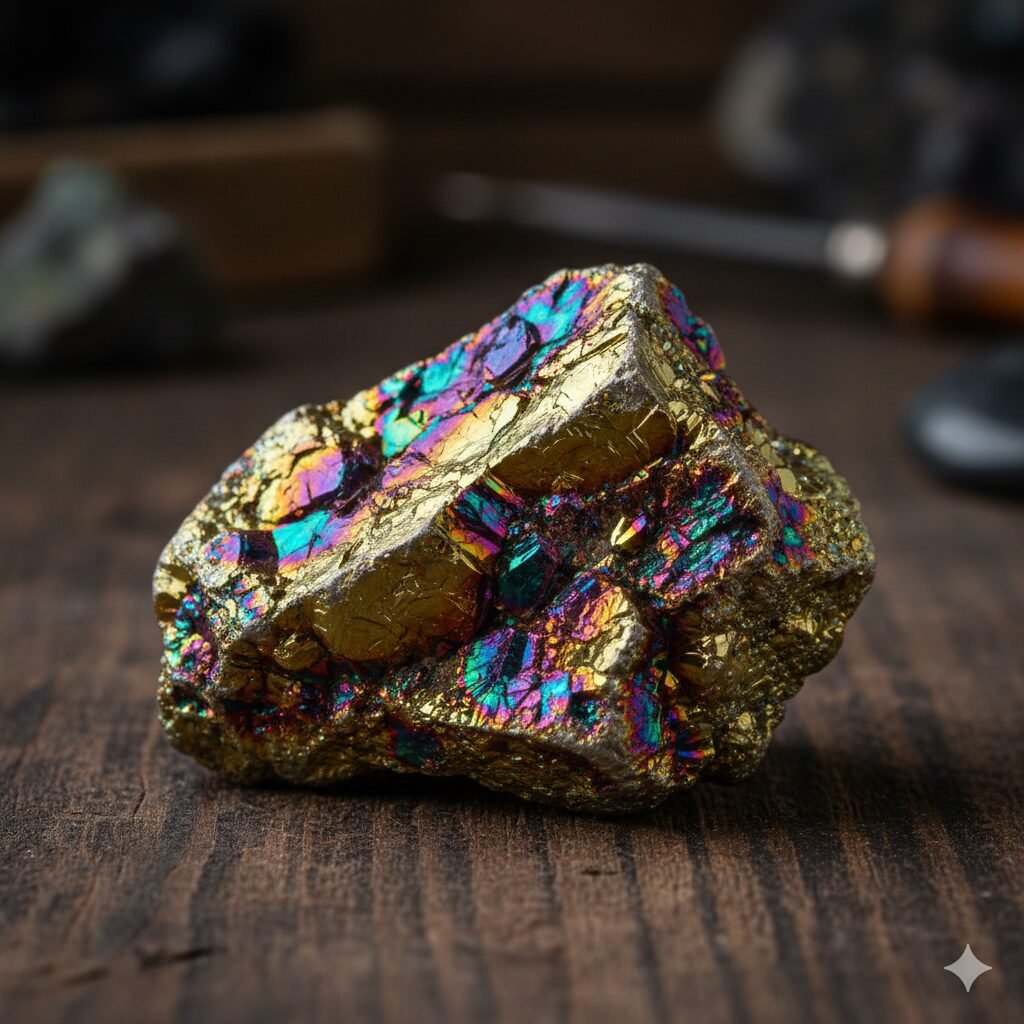
Color and Luster: Brassy-yellow color with a bright metallic luster when fresh.
-
Iridescence: The mineral’s natural oxidation process, or intentional acid treatment, creates a thin film on the surface that interferes with light, producing the spectacular iridescent colors often seen.
-
Hardness and Streak: Chalcopyrite is relatively soft, scoring only 3.5 to 4 on the Mohs scale (it can be scratched with a steel knife or nail), which helps distinguish it from the much harder Pyrite. It leaves a definitive greenish-black streak when rubbed against an unglazed porcelain plate.
-
Tenacity: It is brittle and will fracture or crumble if struck, unlike actual gold, which is malleable.
Economic and Historical Importance
Chalcopyrite is the most abundant and economically significant source of copper on Earth, providing the vast majority of the world’s supply. The development of Bronze Age civilizations and, later, the modern electrical age are fundamentally tied to the large-scale extraction and processing of copper from chalcopyrite ore.
It occurs in a wide variety of ore deposits, often found in association with other sulfide minerals like pyrite, bornite, and sphalerite. Once mined, the copper is extracted through a complex and intensive process involving concentration, smelting, and refining.


Reviews
There are no reviews yet.