Description
Geological Origin and Composition
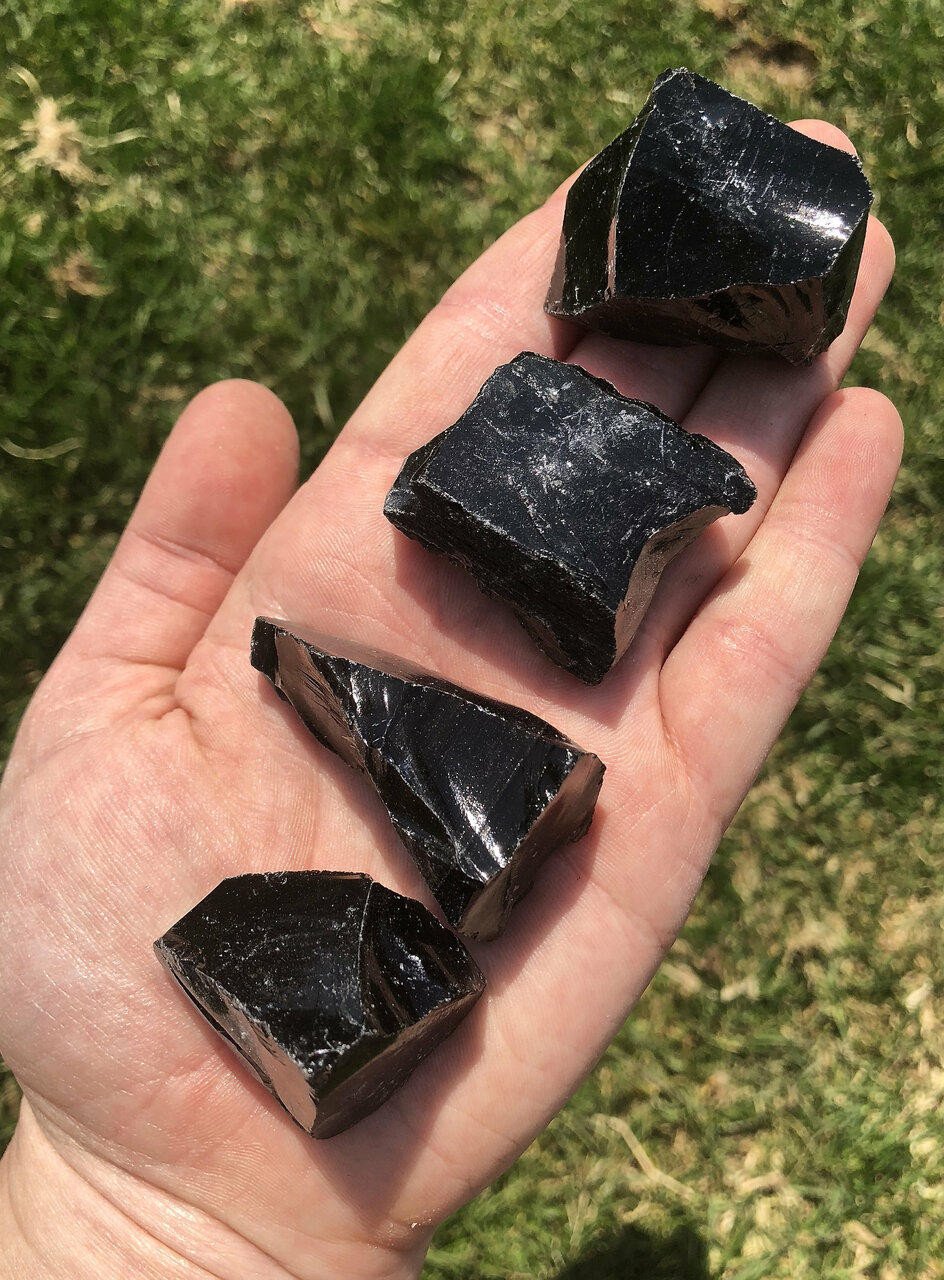
Obsidian is classified as an extrusive igneous rock, though it is often referred to as a mineraloid because it lacks the crystalline structure required to be a true mineral. It is created in volcanic environments when molten lava, rich in silica (usually 70% or more), cools so quickly that the atoms do not have time to arrange themselves into a geometric crystal lattice; instead, it solidifies as natural glass.
Obsidian is usually dark in color, most commonly jet black or dark brown, due to the presence of iron and magnesium impurities. However, there are many varieties based on inclusions:
-
Sheen Obsidian has a golden or silver shimmer caused by trapped, stretched gas bubbles.
-
Rainbow Obsidian displays a vibrant, iridescent, rainbow-like sheen due to microscopic mineral inclusions.
-
Snowflake Obsidian is black obsidian with white, radially clustered crystals of cristobalite, which resemble snowflakes.
It is a relatively soft stone, scoring between 5 and 6 on the Mohs scale of hardness, but its brittle nature and razor-sharp fracture edges were highly valued.
Historical and Symbolic Significance
Obsidian has been used by humans for millennia, dating back to the Stone Age. Ancient civilizations, including the Aztecs and Native Americans, used it extensively to craft arrowheads, spear tips, knives, and even ceremonial mirrors.
Symbolically, Obsidian is often regarded as a protective and grounding stone. It is believed to work quickly to draw out stress and negative energies, acting as a “psychic vacuum cleaner.” It is associated with the Root Chakra (Muladhara), promoting stability, courage, and resilience.



Reviews
There are no reviews yet.