Description
Pyrite, with the chemical formula 2$FeS_2$, is a common and important sulfide mineral known for its distinctive appearance.3
Appearance and Structure:
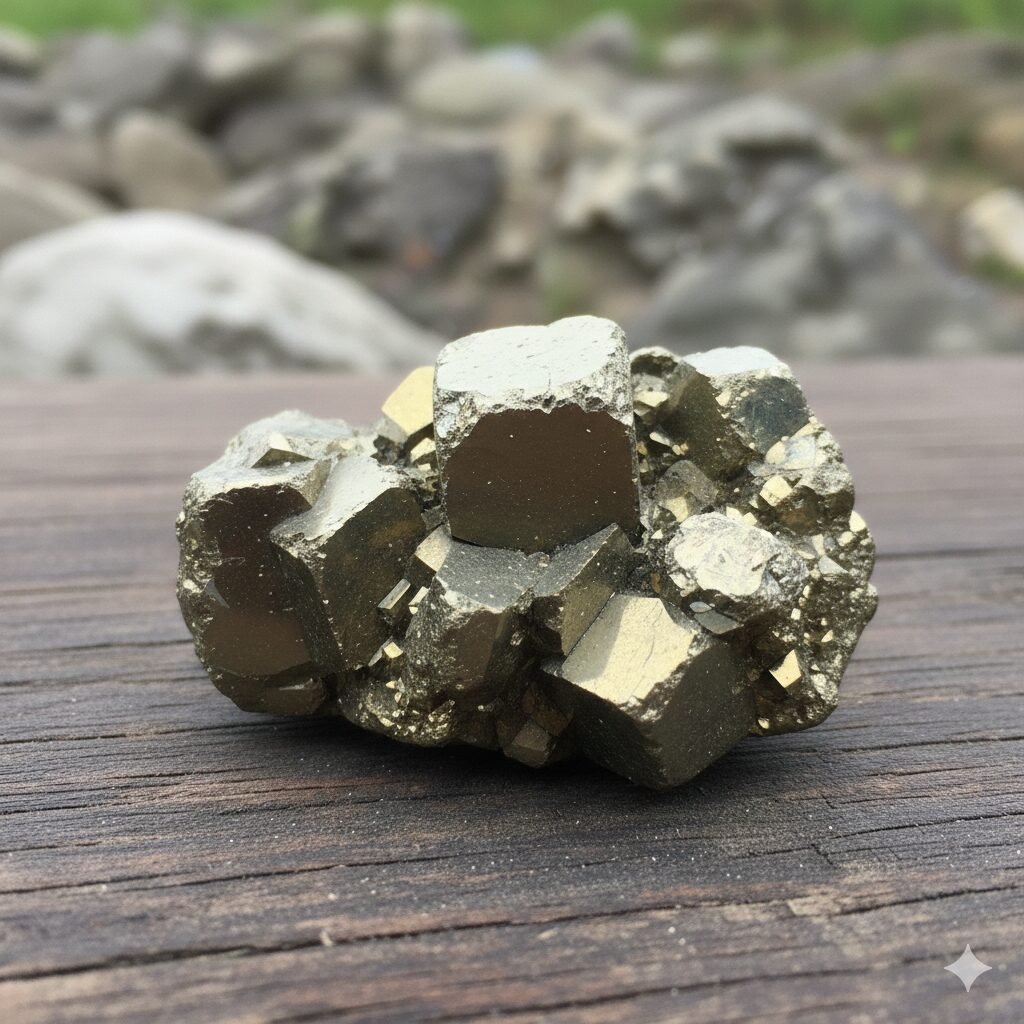
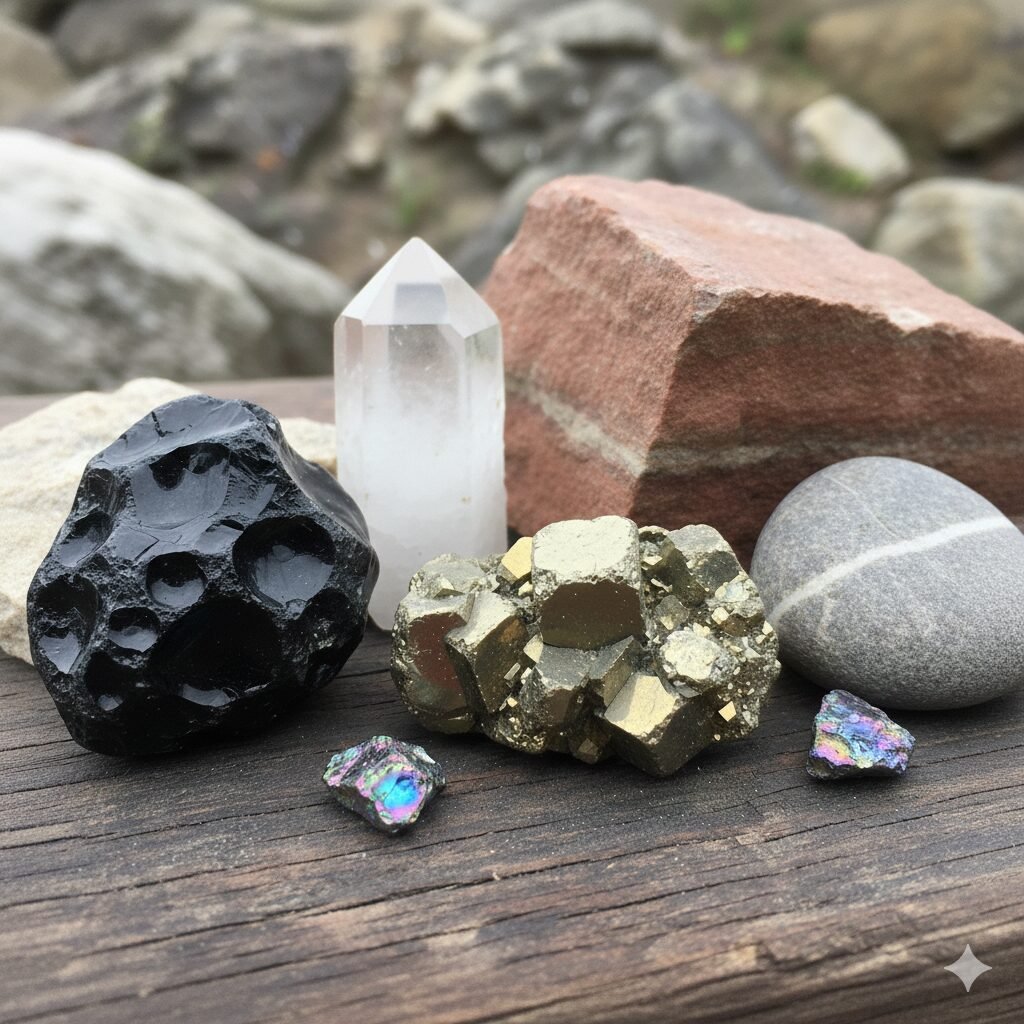
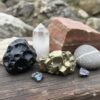
The raw stone is characterized by its bright, pale brass-yellow color and intense metallic luster, which gives it a resemblance to gold, leading to its famous nickname, “Fool’s Gold.”4 It frequently forms well-developed crystals, most notably perfect cubes, but also eight-sided (octahedral) and twelve-sided forms, often displaying fine striations on the faces.5 When found in a massive form, as seen in many raw specimens, it appears as a sparkling, irregular cluster of interlocking crystals.
Geological Context:
Pyrite is found in a wide variety of geological settings, including metamorphic, igneous, and sedimentary rocks.6 It often occurs alongside other sulfide minerals like chalcopyrite and galena. When exposed to air and water, it can oxidize, which is a process that can release sulfuric acid and iron, sometimes leading to environmental concerns in mining regions.7
Uses and Significance:
Historically, pyrite was a source of sulfur for the production of sulfuric acid, and it can occasionally contain trace amounts of actual gold.8 Today, it is primarily valued as a collector’s specimen and is also used in jewelry, though its brittleness and tendency to tarnish require careful handling.9 Its classic cubic structure makes it a favorite subject for mineral enthusiasts

Reviews
There are no reviews yet.